

As time changes so do the needs, and therefore building an ecommerce website is not just an option, it’s a necessity today to reach more customers and grow much faster. However, one main question that always hits the mind is how much does an ecommerce website cost to develop in 2026?
The answer depends on many things. Your design. Features. Platform. Developer experience. And even the type of products you sell.
Some small online stores can launch for a few hundred dollars. Large ecommerce websites with custom features can cost thousands. Hence it is crucial to understand ecommerce website development pricing before starting your development.
This guide will walk you through everything and break down the ecommerce website development cost and other hidden expenses and pricing factors that you must expect this year.
As per Upwork, ecommerce websites are usually much more expensive than regular websites because they have special features like payment systems, product management, customer accounts and other security features.
What Is Ecommerce Website Development ?
It is the process of creating an online store that allows buyers to browse products, add items to cart and proceed online purchases. Professional e-commerce development services usually offer website planning, UI/UX design, frontend and backend development, payment gateway setup, product pages, mobile optimization, security features, SEO and maintenance and updates. The cost of an ecommerce web mainly depends on how advanced features are included.
Average Ecommerce Website Development Cost in 2026
The average cost of an ecommerce web development in 2026 comprises between $1000 to $25000 or above. In fact large enterprise stores can even cost around $100,000.
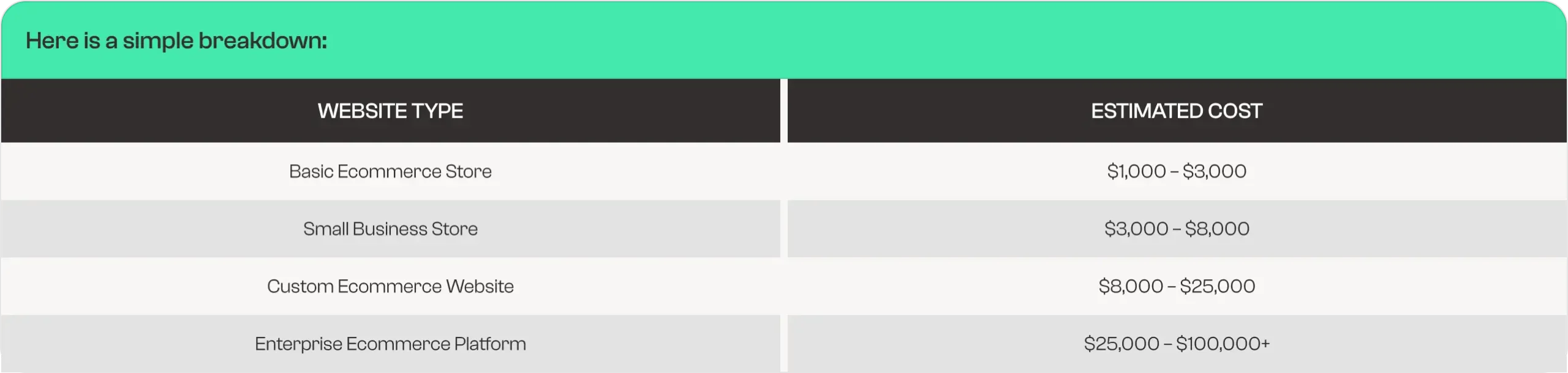
Keep in mind that the cost may vary depending on customization and business needs. A simple shopify store will cost less than a fully custom store with AI recommendations and advanced integrations.
Factors That Affect Ecommerce Website Development Price
There is no fixed cost when it comes to ecommerce development. Every business has its own different needs. Take a look at the biggest factors influencing development pricing in 2026:
1. Website Design and UI/UX Design
The most paramount part of an ecommerce website is a good UI/UX design. Users immediately stop using a website if it looks outdated. A good design improves user experience, hence sales. Full custom designs are expensive because they need designers to create unique layout and experiences, while template-based designs are cheaper.
Typical UI/UX design costs:
- Basic templates: $100 – $500
- Semi-custom design: $800 – $2,000
- Custom UI/UX design: $2,000 – $5,000+
Modern online stores mainly emphasize on mobile-first design because these days buyers usually buy from their smartphones.
2. Ecommerce Platform Choice
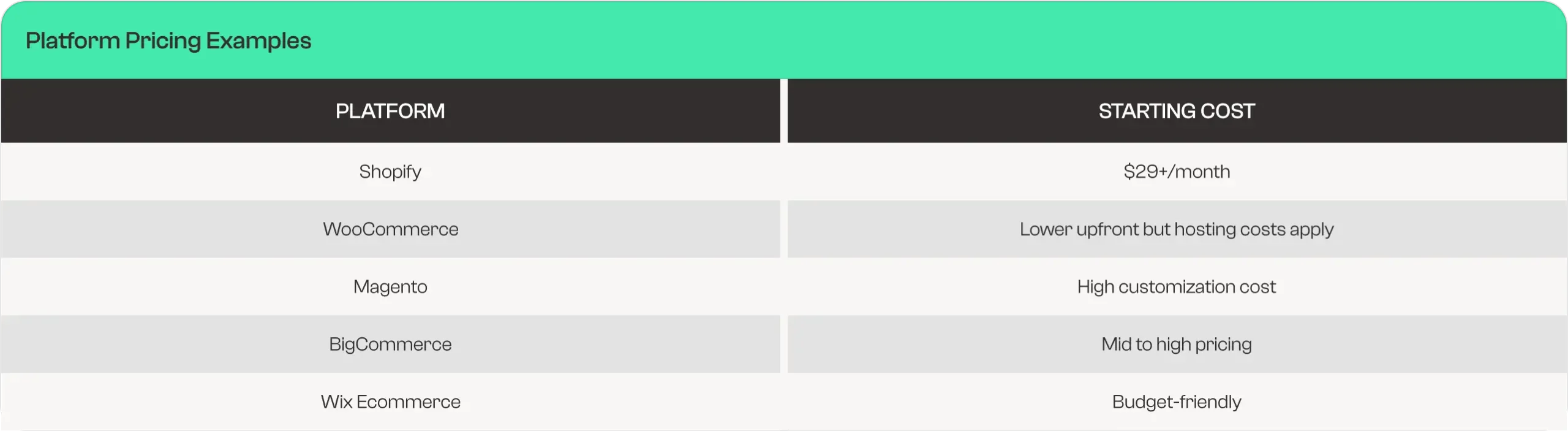
The pricing also heavily depends on what platform you are selecting for your online store. Most popular platforms in 2026 are: Shopify, WooCommerce, Magento, BigCommerce, Wix Ecommerce, and Squarespace.
Shopify and other similar platforms are easier and faster to launch. Other custom platforms require more development time, and coding.
Some recent reports also state that Shopify is one of the most popular platforms for ecommerce because of its scalability and simplicity.
3. Custom Features and Functionality
One important thing to remember is that your development cost will always increase when you add more features. If you are about to create a basic store, it will only need product pages, shopping cart, payment gateway and contact form.
However, if you are about to build an advanced store then you will need multi-vendor systems, subscription billing, AI recommendations, inventory automation, Live chat, CRM integrations, advanced search filters, and loyalty programs. Custom coding increases development hours and testing requirements.
4. Number of Products
Number of products also matters. For example, a small store that has 20 products only is easier to develop than a store with 20000 products. Large catalogs need:
- Better database management
- Faster search systems
- Advanced filtering
- Inventory tools
This increases the ecommerce development cost significantly.
5. Payment Gateway Integration
For every online store, a secure payment gateway is a must. Many ecommerce websites integrate payment services like Stripe, PayPal, Square, Apple Pay, and Google Pay. Bear in mind that some payment systems charge setup fees and also deduct transaction percentages. So, if you are about to choose a custom payment gateway integration, it will definitely increase your development cost.
6. Mobile Optimization
Mobile optimization is necessary because these days people shop via smartphones. Therefore, a responsive ecommerce website must work on smartphones, tablets, laptops, and desktop screens.
Developers are required to spend extra time improving speed, navigation, and checkout experiences for mobile users.
7. SEO and Marketing Features
Now, let’s talk about another important factor which is SEO. I mean there is no use of a beautiful website if nobody finds it. SEO is a major part of a professional web development. Without it, your site will not be visible.
Seo offers several features like fast loading speed, Product schema, mobile performance, blog setup, internal linking, and URLs and meta tags. Some businesses also invest in email marketing tools, analytics, and automation systems. These tools add to the overall ecommerce website pricing.
8. Hosting and Security Costs
Many people forget about ongoing costs.
Besides development, you also pay for:
- Domain name
- Hosting
- SSL certificate
- Security updates
- Maintenance
- Backups
Monthly maintenance costs can range from $50 to $500 or more depending on the website size.
DIY vs Professional Ecommerce Development Services
Many beginners ask whether they should build the store themselves or hire professionals.
The answer depends on your goals.
DIY Ecommerce Websites
DIY builders are cheaper and faster.
Good for:
- Small startups
- Side businesses
- Beginners
- Small product catalogs
Limitations include:
- Less customization
- Limited scalability
- Basic performance
- Fewer advanced features
Professional Ecommerce Development
Professional developers offer:
- Better UI/UX design
- Custom features
- Faster performance
- Better security
- SEO optimization
- Scalability
Hiring experts costs more upfront but often saves money later because the website performs better and needs fewer fixes.
According to industry reports, many growing businesses eventually move from DIY platforms to custom ecommerce solutions as they scale.
Hidden Ecommerce Website Costs
Many businesses only calculate development costs and forget hidden expenses.
Here are some common hidden costs.
Third-Party Apps
Many ecommerce platforms charge extra for apps and plugins.
Examples:
- Email marketing tools
- Shipping tools
- Review systems
- Analytics apps
- Inventory apps
Content Creation
Professional product descriptions, banners, videos, and photos cost money.
Good content improves sales and SEO rankings.
Maintenance
Websites need regular updates to stay secure and fast.
Maintenance usually includes:
- Bug fixes
- Plugin updates
- Security patches
- Backups
- Speed optimization
Marketing Costs
After launching your store, you still need customers.
Businesses often spend on:
- SEO
- Google Ads
- Social media ads
- Influencer marketing
- Email campaigns
Ecommerce Website Pricing by Business Size
Different businesses have different needs.
Small Businesses
Small businesses usually spend between $1,000 and $5,000.
These websites often use templates and basic ecommerce features.
Medium Businesses
Mid-sized businesses usually invest $5,000 to $20,000.
They need better UI/UX design, SEO, integrations, and automation.
Enterprise Brands
Large companies often spend $25,000 to $100,000+.
These websites include:
- Custom backend systems
- Enterprise security
- Advanced analytics
- Multi-language support
- AI features
- Large databases
How to Reduce Ecommerce Website Development Cost
You do not always need the most expensive solution.
Here are smart ways to reduce ecommerce web design pricing.
Start Small
Launch with core features first.
Add advanced tools later as your business grows.
Use Existing Platforms
Shopify and WooCommerce reduce development time.
Avoid Unnecessary Features
Do not overload your website at launch.
Focus on user experience and conversions.
Plan Everything Early
Clear project planning avoids expensive changes during development.
Many Reddit discussions from developers and startups mention that unclear requirements are one of the biggest reasons projects go over budget.
Trends Affecting Ecommerce Development Cost in 2026
Ecommerce continues evolving every year.
Here are some trends increasing ecommerce website development price in 2026.
AI Features
AI-powered tools are becoming common.
Examples include:
- Product recommendations
- AI chatbots
- Personalized shopping
- Smart search
- AI checkout systems
These features increase development complexity and costs.
Faster Website Performance
Users expect websites to load instantly.
Businesses now invest more in speed optimization and cloud hosting.
Headless Commerce
Some brands now use headless ecommerce systems for flexibility and performance.
These setups require advanced developers and bigger budgets.
Is Ecommerce Website Development Worth It?
Yes. Absolutely.
Ecommerce sales continue growing worldwide.
A professional online store helps businesses:
- Reach global customers
- Sell 24/7
- Build trust
- Increase revenue
- Reduce physical store costs
The key is choosing the right solution for your budget and business goals.
You do not always need a huge budget to start.
Many successful ecommerce businesses started with simple stores and upgraded over time.
Final Thoughts
Understanding ecommerce website development pricing in 2026 helps businesses avoid surprises and plan better budgets.
The ecommerce website development cost depends on many factors like platform choice, UI/UX design, custom features, product size, integrations, and ongoing maintenance.
Small stores can launch for a few thousand dollars, while advanced ecommerce platforms may require much larger investments.
The best approach is to focus on your actual business needs instead of chasing unnecessary features.
A fast, simple, secure, and user-friendly ecommerce website usually performs better than an overly complex one.
Before hiring developers or agencies, always compare pricing, review portfolios, and clearly define your goals.
The right ecommerce website is not just an expense. It is a long-term investment in your business growth.
