


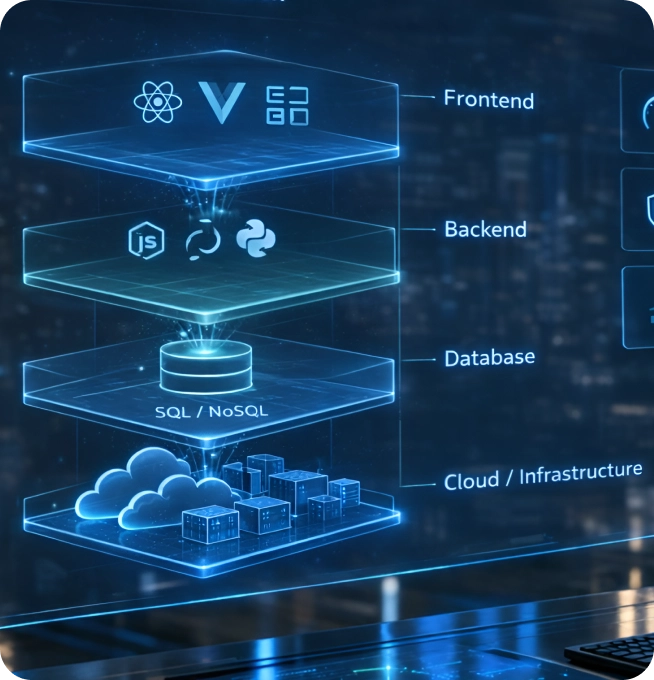
What Is a Web Development Stack?
A web development stack is like the foundation of your app. It decides how everything connects and works together. Picking the right stack makes your app:
- faster
- more stable
- easier to improve and grow later
When you understand each part, you avoid slow speed and tough problems.
-
Frontend: This is what users see and click. It uses HTML, CSS, and JavaScript tools like React or Vue.
-
Backend: This works behind the scenes. It handles data, logins, and app rules. Popular choices are Node.js, PHP, or Python.
-
Infrastructure: These are the servers, hosting, and cloud services. They keep your app live on the internet.
-
Integration: When frontend, backend, and infrastructure work well together, your app runs smoothly. If they don’t match, you get slow pages, crashes, or angry users.
Why Choosing the Right Web Development Stack Matters
Choosing the wrong web development stack can cause problems. It can slow your project, raise costs, and create security risks. The right stack fits your project goals and resources. It also makes your app easier to maintain and gives users a better experience.
-
Performance: A modern stack means your app loads quickly and feels smooth to use.
-
Security: Good tools and practices keep user data safe and stop attacks.
-
User Experience: A clean, consistent design makes users feel happy and want to keep coming back.
-
Maintenance: Popular, well-tested technologies mean fewer bugs and cheaper fixes over time.
-
Hiring: Some stacks need specialized developers, which can affect your budget.
-
Scalability: Cloud-ready and modular stacks make it easier to grow your app and add new features.
Factors to Consider When Selecting a Web Stack
Before picking a stack, know your business goals. Decide which features are most important for launch. Think about how your app will connect with other systems.
-
Traffic & Performance: Apps with lots of users need a strong backend and caching to stay fast. Real-time things like chat need event-driven tools to work smoothly.
-
Budget & Timeline: Open-source tools are usually free and save money. More complex stacks can take longer to build and cost more.
-
Team Expertise: Use technologies your team knows. Check if specialized developers are available. A stack your team can handle saves time and avoids delays.
Frontend Technology Options
The frontend is what users see and touch in your app.
Choosing the right frontend tools changes:
- how fast it feels
- how easy it is to use
- how simple it is to build
Each option has good sides.
Pick the one that matches your project and what your team knows.
- React Great for apps that feel alive and change often. Very flexible. But it can make the app a little heavier.
- Vue Light and easy to learn. Perfect for small or medium projects.
- Vanilla JavaScript No extra tools needed. Best for simple, basic websites.
- Frameworks They keep your code clean. They help you build faster. But they add some extra weight. So balance speed and power carefully.
Backend Technology Choices
The backend runs your app behind the scenes. Node.js is good for real-time apps. PHP works well for content-heavy websites. Python with Django or Flask is secure and great for data-driven apps.
Backend design matters too. API-driven systems are easier to scale and connect with other services. Monolithic systems are simpler but harder to expand. Pick what fits your project and your plans for growth.
Security matters a lot.
Your stack should make it easy to:
- encrypt data
- handle logins safely
- store information securely
You also need to follow laws like GDPR to keep user data protected.
Database Selection
Your choice of database decides how you store and get your data.
SQL databases like MySQL or PostgreSQL are structured and good for transactional apps. NoSQL databases like MongoDB or Firebase are flexible and suit real-time or unstructured data.
Use SQL for complex queries. Use NoSQL for fast-changing or unstructured data. Also, pick databases that can grow with your app.
Choose ones that scale easily and have automatic backups.
This keeps your app reliable and safe.
Hosting and Infrastructure
Your hosting choice affects how fast, dependable, and ready-to-grow your app is.
Shared hosting is cheap and works well for small websites.
Cloud hosting, like AWS or Digital Ocean, is secure and easy to scale. Managed hosting reduces server work but can cost more.
Use deployment tools to release updates fast. Monitoring tools watch your app to see if it’s online, running fast, and catching any errors.
Good hosting and smart planning keep everything stable and working well.
Performance, Security, and Reliability
Performance is very important.
Your stack should make it easy to:
- CDNs
- caching
- optimized images
Cut down on extra API calls and slow server responses.
Security matters too.
Use safe login methods like OAuth or JWT.
Encrypt your data.
Keep logs of who accesses what.
Reliability comes from handling errors well.
Good error handling stops small problems from crashing your app.
Watch logs, handle errors carefully, and set up alerts to avoid downtime.
Choosing a Stack for Different Project Types
Business websites
These usually need something simple. A basic CMS works great. Use PHP or Node.js for the backend. Pair it with an SQL database.
SaaS platforms
These do well with a modern setup. Use React for the frontend. Choose Node.js or Python for the backend. Go with cloud hosting and strong APIs.
E-commerce apps
These often use React or Vue for the frontend. Node.js or PHP works well for the backend. Mix SQL and NoSQL databases to handle products, users, and orders.
Enterprise systems
These need advanced setup. Use microservices to keep things organized. Pick scalable databases that can grow. Choose secure cloud infrastructure for safety and reliability.
Common Mistakes to Avoid
Many people make mistakes when choosing a web development stack.
Following trends or skipping planning often causes big problems later.
It’s smart to focus on what your project actually needs.
-
Avoid trends Don’t pick a technology just because it’s popular right now.
-
Keep it simple Don’t make small projects too complicated with fancy tools.
-
Plan for maintenance If you ignore updates and long-term care, fixes will cost a lot later.
-
Focus on business needs Let your real goals and needs guide which tech you choose.
Balancing Modern Technology with Stability
Use proven technologies to cut down on bugs and lower risks.
Avoid getting stuck with one company by choosing modular designs and open standards. A balanced approach keeps your app fresh and innovative while staying stable and safe.
How a Professional Team Helps
A professional team can make choosing a web stack much easier.
They match the right technology to your goals.
They also plan ahead for future growth.
Their experience helps you skip common mistakes and avoid big risks.
-
Evaluate requirements They look closely at your project. Then they suggest the best stack for it.
-
Align with business goals They keep things focused. No extra features or unnecessary complexity.
-
Anticipate risks They spot problems early—like security gaps, scaling issues, or future maintenance headaches.
-
Save time and costs Expert help leads to a solid, efficient solution. You avoid expensive fixes later.
Final Thoughts
Choosing a web development stack is about more than just the tech.
It’s about your goals, what your team knows, and how you want to grow.
A good stack gives you:
- fast performance
- strong security
- easy scaling
- simpler maintenance
Thoughtful planning, help from experts, and clear goals are the keys.
They help you build a website or app that works great now and stays strong in the future.
Web Development Stack FAQs
What is the best web development stack?
There is no one-size-fits-all. The best stack depends on your project, team, and goals.
Is one stack suitable for all projects?
No. Websites, SaaS apps, and enterprise systems have different needs.
Can a web stack be changed later?
Yes, but it can be costly. Modular architectures reduce the risk.
How does the stack affect website cost?
Complex stacks with niche technologies increase development and maintenance costs.
How long does it take to build using a modern stack?
Simple websites may take a few weeks, while SaaS or enterprise apps can take months.
