



Adaptive software development is a flexible way to build software. It helps teams manage changes during a project.
Instead of following one strict plan, developers adjust and improve the software step by step.
Today, software projects change very quickly. Customers need change. Business goals change. Technology changes, too.
That is why many companies now use adaptive software development in software engineering. It helps teams stay flexible and work faster.
Many businesses that offer professional software development services also use adaptive methods because they work well for modern software projects.
Understanding Adaptive Software Development
If you are asking what is adaptive software development, the answer is simple. It is a software development method made for changing environments.
In older methods, teams created a full plan before starting the project. After that, changing anything became difficult. ASD in software engineering works differently.
Teams build software in smaller parts. They test it often. They collect feedback. Then they improve the product again and again. This makes development easier and faster.
Why ASD Became Popular
Software development is not as simple as it was years ago. Today, businesses want faster updates. Customers expect better apps and websites.
Sometimes a company changes its idea in the middle of a project. Traditional development methods struggle with these situations.
Adaptive software development helps solve this problem. It allows teams to adjust without starting over.
This is one reason why adaptive software development in software engineering is becoming more popular.
The Main Goal of ASD
The main goal of ASD is flexibility. It accepts that change is normal.
Instead of trying to avoid change, teams learn how to work with it. ASD also focuses on teamwork and communication.
Developers, testers, managers, and clients work together during the whole project. This helps teams solve problems faster.
How Adaptive Software Development Works
ASD usually works in small cycles. Teams do not build everything at once.
They create one part of the software first. Then they test it and improve it. After that, they move to the next part.
This process continues until the project is complete. ASD in software engineering mainly follows three simple steps:
- Planning
- Teamwork
- Learning
These steps repeat throughout the project.
Flexible Planning
Planning is still important in adaptive software development. But the planning is not too strict.
Teams understand that things may change later. So they create flexible plans instead of fixed ones. This makes it easier to adjust when new problems appear.
Strong Team Communication
Good communication is a big part of ASD. Everyone works together closely. Developers talk to clients regularly. Teams share updates often. This reduces confusion.
It also helps projects move faster. Many companies offering professional software development services use this approach because communication improves project quality.
Learning During Development
ASD focuses heavily on learning. Teams learn from mistakes, testing, and customer feedback.
They use this information to improve the next version of the software. This process helps create better products over time. Instead of waiting until the end, improvements happen during the whole project.
Important Features of ASD in Software Engineering
There are many useful features of adaptive software development in software engineering.
Small Updates
Software is released in smaller parts. This makes testing easier.
Continuous Feedback
Customers give feedback regularly. Teams use that feedback to improve the software.
Quick Changes
Developers can adjust features quickly when needed.
Better Teamwork
Everyone works together throughout the project.
Lower Risk
Problems are found earlier because testing happens regularly.
Difference Between ASD and Traditional Development
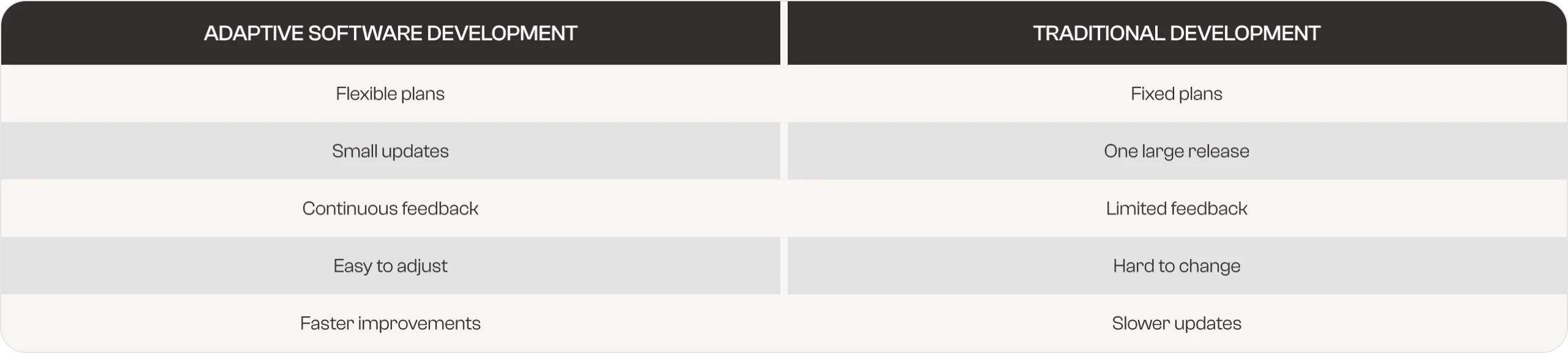
Traditional development methods follow strict steps. Everything is planned before development starts. Changing requirements later becomes difficult.
ASD works differently. It accepts change from the beginning. Teams stay flexible during the whole process. Here is a simple comparison:
ASD and Agile Are Similar
Many people think ASD and Agile are the same thing. They are similar, but not exactly the same. Adaptive software development is actually one of the early agile methods.
Both focus on:
- Flexibility
- Teamwork
- Customer feedback
- Continuous improvement
But ASD puts extra focus on learning and adapting during the project.
Benefits of Adaptive Software Development
There are many reasons why companies use ASD in software engineering.
Faster Development
Teams can release software faster with smaller updates.
Better Customer Satisfaction
Customers stay involved during the project. This helps teams create products users actually want.
Easy to Handle Changes
ASD makes it easier to adjust requirements.
Better Software Quality
Regular testing improves the final product.
Improved Communication
Teams work together closely, which reduces mistakes.
This is why many businesses look for professional software development services that use adaptive methods.
Challenges of ASD
ASD also has some challenges. Take a look below to find out what real problems in ASD look like:
Frequent Changes
Too many changes can sometimes confuse teams.
Requires Experienced Developers
Teams need good communication and decision-making skills.
Hard to Predict Timelines
Because projects change often, exact deadlines can be difficult.
Customer Involvement Is Important
Clients need to stay active during development.
Without feedback, ASD becomes less effective.
Where ASD Is Commonly Used
Adaptive software development is used in many industries today. It works especially well for projects that change quickly.
Some common examples include:
- Mobile apps
- SaaS platforms
- Web applications
- Startup products
- Cloud software
- AI tools
- E-commerce websites
These projects usually need frequent updates and improvements.
Why Startups Prefer ASD
Startups often change ideas quickly. They test products in the market and improve them later. ASD supports this process very well. Instead of spending years building one perfect product, startups can launch faster and improve gradually. This saves time and money.
The Future of Adaptive Software Development
Technology keeps changing every year. Businesses now need software updates faster than before.
Because of this, adaptive software development in software engineering will continue growing. Companies want flexible systems that can improve quickly. ASD helps make that possible.
Final Thoughts
Adaptive software development is a smart way to build modern software. It helps teams stay flexible and improve continuously.
Instead of following rigid rules, ASD focuses on teamwork, learning, and quick improvements. That is why many companies now prefer ASD in software engineering for modern projects.
Businesses looking for professional software development services also choose adaptive methods because they help create better software with fewer delays and lower risk.
